Tuesday, October 18, 2016

Important tips when marketing bodyweight boot camps and HIIT gyms


Image source: torquebarbell.com

With the fitness industry experiencing a massive boom in the past 20 years or so, a generation of Americans has turned into health buffs. More and more people have been seeking out ways to get healthier and fitter. People have begun to eat right and move more. Technology, it seems, has also kept up. Hundreds of new apps have catered to health, from calorie to step counters to heart rate monitors.

Many new gyms have opened in the past years that have offered new, better, and more practical alternatives to the traditional bodybuilding concepts. These gyms focus on functional fitness and have incorporated routines such as bodyweight boot camps and high intensity interval training (HIIT). Owners of these kinds of gyms know that their establishment isn’t capital-intensive; however, the marketing side of it is tricky. Many people still prefer the old-style gyms and are afraid of getting into new things. For those gym owners, here are a few tips on marketing.

Image source: traralgonharriers.org.au

More personalized promotional gimmicks

More personalized promos make consumers feel special. Think of Starbucks and how baristas write the names of customers on their cups. It shows that businesses don’t see clients as numbers and payments, but as people who they are helping reach their health goals. Different rates for couples who are about to get married or people who are about to attend a formal event (because everyone wants to look good in a tux or a gown) could be a good idea.

Community events

Community events, as the name suggests, bring the community together. Gym owners can tie-up with several organizations such as restaurants or youth groups to host various kinds of activities. Think of fun runs, and how gyms can give away shirts, while other business establishments can provide beverages for parched participants. Sports days with friendly competition are also good ideas. Gyms partnering with other establishments can spearhead small sports tournaments like basketball or tag football, just to raise awareness that in the area, a fitness center exists that can boost the level of one’s athleticism.

Thursday, August 18, 2016

How much does setting up the Olympics cost?


Image source: i.kinja-img.com

Back in 1948, it cost London around $1 million to set up the Olympic Games. How times have changed. Over the past decades, the cost of setting up a special megaproject of this magnitude has steadily (on an average) gone up. Truth be told, setting up the Olympic Games is like planning a number of massive multimillion-dollar projects that include infrastructure and venues. Countries bid heavily to host the Olympics because they foresee long-term monetary gains over the short-term losses, plus the fact that the changes made to their cities would be welcome improvements.

The exact total cost of the Olympic Games is always difficult to determine since there are also intangible costs to the environment and society, among others. But expenses such as improvements and renovations made to infrastructure, the beefing up of security, and the budget allotted to the many different operations are more or less estimated with acceptable accuracy.

Image source: i.ytimg.com

Beijing 2008 had the biggest price tag in Olympic history. The organizers claimed that the 2008 Beijing Olympic Games cost around $15 billion, which was roughly the equivalent of the 2004 Athens Olympic Games. They also reported that revenues reached around $16 million. There were, however, some reports that estimated a total cost that far exceeded what the organizers presented. The price tag of the 2008 Beijing Olympic Games was found to be over $40 billion. This meant that this incarnation of the summer Olympics was far and away the most expensive in history, until of course the 2014 Sochi Winter Olympics, which was marred by controversy.

In the shadow of Beijing 2008, which many global event organizers thought used blatant overspending, the organizers of London 2012 cut down costs dramatically and put up a successful Olympic Games for a little over $10 billion. Expensive? Yes. But not as expensive as Beijing.

Monday, July 11, 2016

Music streaming: Now more popular than video


Spotify, Apple Music, Tidal, Google Play, and others have combined to conquer major streaming site YouTube and Vevo. Before this year, video streaming sites have led audio platforms in terms of number of user streams.

But numbers during the first half of the year have shown there were 114 billion music streams, topping the 95 billion videos that were streamed. The number of audio streams more than doubled from the same time period in 2015, while video streams grew by just 23 percent.

Overall streaming increased by 58 percent from last year, continuing a surge in rate of growth.

Image source: images-eu.ssl-images-amazon.com

The increase in popularity in music streaming had been helped by Rihanna’s Work, which is the most played song so far this year. Drake’s Views, meanwhile, is the most requested album, having been streamed 1.5 billion times. This is followed closely by Justin Bieber’s Purpose at 1.3 billion and Rihanna’s Anti at 1.2 billion.

The shift toward music streaming is notable because YouTube has more than a billion users all over the world. Spotify, which is currently the largest streaming company, only has 89 million active users every month.

However, the rising lead of audio streaming over video would possibly empower the music industry in its negotiation with YouTube over new licensing deals. Music artists and record labels have long argued that the video stream empire has been “unfairly siphoning value away from musicians and songwriters.”

Image source: ctvnews.ca

In the UK, the British Phonographic Industry reports that the music industry was able to earn more than £146 million in 2015, while video streams netted them £24.4 million.

YouTube, in its defense, claims that it shelled out $3 billion to the industry and has been working collaboratively with the industry to provide the artists their due. The ascent, though, of audio streaming sites generally has boded well for the industry as it has contributed to the 6.5 percent growth of music consumption in the US, despite the decline in CD and digital album sales.

Wednesday, June 22, 2016

How Zuffa became a major player in MMA broadcasting


Zuffalogo--vimeo_crop_north.jpg (542×361)
Image source: bleacherreport.com


Ask any fan of combat sports, and they’ll tell you that the premiere mixed martial arts league in the world is the Ultimate Fighting Championship, which is more popularly known as the UFC. The UFC is where the best fighters from other leagues come to fight.

Just how did the UFC come to be as big as it is today? Hardcore fight fans will tell you that it’s because of the fighters. But those in the television industry and those who’ve been following the biggest boxing matches in history will tell you that the fighters are only half of the equation. The promotion matters just as much.

Zuffa, LLC is the sports promotion company that lifted the UFC out of small countryside arenas, with drunk audiences, and several circus sideshow freaks as its featured fighters, into the MMA giant today. The key word was exposure. After the UFC got the likes of Vitor Belfort, Tito Ortiz, Chuck Liddell and Randy Couture under its banner, it wasn’t long before the general public noticed the quality of fighters squaring off in the octagon.

Image source: examiner.com


From that point onwards, Zuffa owners, the Fertitta brothers, and Dana White signed television deal after television deal for a monopoly of the MMA broadcasting rights possible. After this, Zuffa bought out rival fighting promotions World Fighting Alliance, Pride Fighting Championships, World Extreme Cagefighting, Strikeforce and, Invicta FC. With these buyouts, Zuffa then began to recruit their top fighters and incorporate them into the UFC.

Today, the UFC is looking to expand further, this time into China. In order to do this, owners of Zuffa would need to sell a minute percentage of their ownership. The world and fight fans can look forward to even bigger things in the future, as Zuffa and the UFC take over mixed martial arts on a global scale.

Tuesday, May 17, 2016

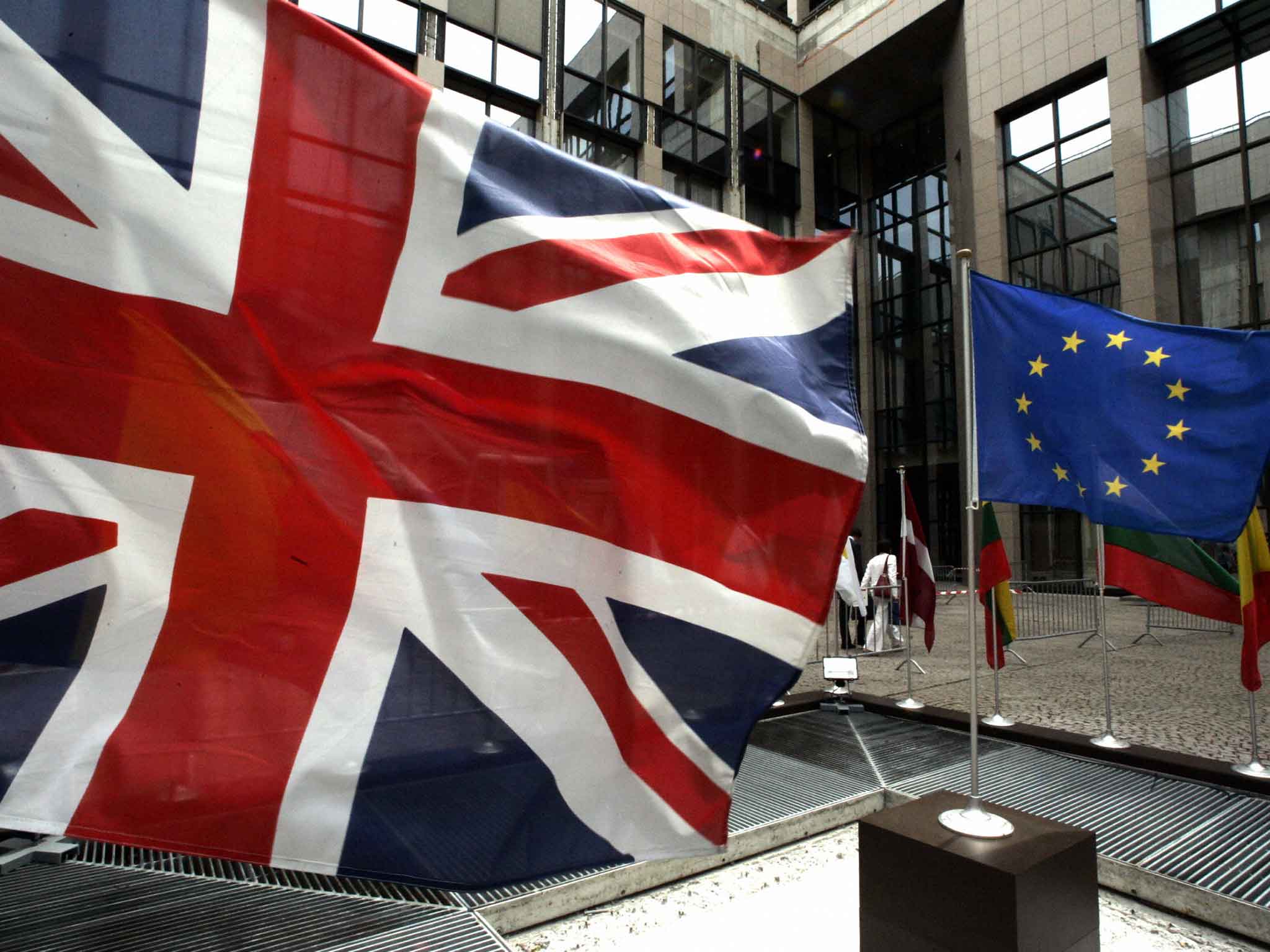
Brexit: A brief background


U.K. Prime Minister David Cameron has called for a referendum to decide whether Britain should leave or remain in the European Union. According to Cameron, it is time for the British people to have their say about the country’s EU membership. The referendum will be held on June 23.

The European Union is an economic and political partnership among 28 European countries. The union aims to foster economic cooperation through free movement of people, goods, and services within its member countries. It has its own law-making body, the European Parliament, which sets policies for a broad range of areas including environment, health, consumer rights, and migration.

Image source: fortunedotcom.files.wordpress.com

The U.K. Independence Party and half of Conservative MPs are lobbying for Brexit. The “leave” campaign believes that Britain is held back by EU. They argue that the millions of pounds spent on membership fees offer minimal return and could be spent on more important endeavors such as education and scientific research. Regaining full control of Britain’s borders to reduce the number of immigrant workers is another point raised by those for Brexit.

The Prime Minister, along with 16 members of the cabinet, advocates for the country’s continued membership of EU. The “remain” lobby sees the benefits of the union in boosting the country’s economy through free movement of labor and trade. They also argue that a unified Europe promotes greater influence in foreign policy and creates an avenue on better trade and defense negotiation.

Image source: static.independent.co.uk

Economists are still uncertain about the long-term impacts of Brexit on the British and European economies but both “leave” and “remain” parties acknowledge that the short-term consequences of departing the union are likely to be negative. Brexit could expose Britain to heightened uncertainty over future trade arrangements that could potentially incur losses in income. The worst case scenario, according to the organization Open Europe, is that U.K. GDP would be 2.2 percent lower in 2030 if it leaves EU. Conversely, in a best case scenario, Britain could increase its GDP by 1.6 percent after Brexit.

Opinion polls show that the British people remain split on the Brexit issue. As U.K. nears the referendum, it is imperative for the citizens to weigh the pros and cons of leaving the union as the outcome of Brexit will impact not only Britain and Europe but also the rest of the world.

Friday, December 25, 2015

Forecasts and trends: Business in 2016


It is that time of the year again when industry observers share their insights on what’s in store for companies in the next 12 months. If 2015 was marked by high-profile mergers, jittery financial markets, shrinking economies, and corporate blunders, will 2016 follow the same path or a different road? Below are three projections for the coming year:

 More gigs to come: The so-called “gig economy” or an environment wherein temporary positions are prevalent and companies tap independent workers for short-term projects has finally made its mark this year. A 2015 survey by Freelancers Union of over 1,000 U.S. workers revealed that 34 percent had done freelance work over the past year, and 60 percent of them credit more than 25 percent of their income from such gig.

While there is still an ongoing debate on how exactly such employment model will benefit both independent contractors and organizations in the long-term, the fact remains that freelance work will continue to multiply, with more people looking to supplement their income and to inject more flexibility in their schedule.

Image source: theselfemployed.com

Technology will still rule. While the introduction of new technology in one way or the other has resulted in disruption, observers believe that 2016 will be the year the business community will witness a transformation in various segments. For instance, work mobility or the ability to work from anywhere, anytime, and on any device, will be primarily driven by technology. And with more workers, especially millennials favoring such setup, 2016 will see more advanced technology, devices, and tools that will support work flexibility and boost productivity.

Another use of advanced technology in business is in security. With more reports of data breaches and hacking, companies are looking for more stringent measures to protect sensitive information. And technology will play a key role in keeping data secure from malicious attacks.

Image source: mhlnews.com

It will be all about the [user] experience. Companies must acknowledge the fact that in the mobile age, customers expect actions to be completed in just a single tap. Gone are the days of waiting for advances in technology has allowed companies to offer their customers seamless and enriching experience.

For a truly rich user experience, companies will need to convert existing processes from analog to digital, to fully embrace the cloud, to boost their big data allocation, to solidify further their mobile strategy, and to smartly harness the power of social media.

Thursday, September 10, 2015

Retail moves: Tesla adds clothes and accessories to car lineup


http://www.teslamotors.com/sites/default/files/images/model-x/teaser@2x.jpg?2
Image Source: teslamotors.com


In a bid to unwrap the enigma behind its product, Tesla Motors has revamped its stores worldwide as the electric car company prepares to deliver its first sport-utility vehicle, Model X, early next year. A critical part of this makeover is the introduction of a retail lineup of bags, gloves, and other leather accessories, which call to mind the posh fashion merchandise of luxury car makers Ferrari, Porsche, and BMW.

The Tesla Design Collection, which will be available through Tesla’s revamped stores, will include premium leather pieces such as the $400 Moab Weekender Bag, the $300 Aurland Tote, the $100 Men's Touch Screen Leather Driving Gloves, the $100 Bethesda iPad Sleeve, the $40 Lully Pouch, and the $30 Maumee Key Fob Sleeve. Cycling jerseys will also go on sale in Tesla stores in October.

An in-house product design team based in Los Angeles is working on the retail collection. The materials used for the collection come from scraps of interiors of Tesla vehicles. According to Tesla, customers usually buy bags and accessories that match their cars’ interiors. In addition, the company is looking into a twice yearly, seasonal revamp of its stores, similar to the mechanisms of the fashion industry.


http://d2odvx3v4cbpyu.cloudfront.net/wp-content/uploads/2014/10/Tesla-Lifestyle-Leather-Goods.jpeg
Image Source: teslarati.com


Telling the Tesla story

Tesla’s retail strategy and its store transformation are part of the company’s efforts to tell its story, which industry observers note as an ingenious move for a young firm that is selling a product unfamiliar to most consumers. In the revamped stores, for example, interactive displays will highlight four elements about Tesla’s electric cars: safety, autopilot features, charging networks, and the dual motors that power each axle. Product specialists are also on hand to greet and educate costumers.

The latest Tesla project is also all about luring new customers and keeping current ones, which are critical in reaching the yearly sales goal of 500,000 electric cars by 2020 set by CEO Elon Musk. The company hopes that by making its in-store experience more engaging, it will attract a steady stream of curious shoppers.