Tuesday, May 17, 2016

Brexit: A brief background


U.K. Prime Minister David Cameron has called for a referendum to decide whether Britain should leave or remain in the European Union. According to Cameron, it is time for the British people to have their say about the country’s EU membership. The referendum will be held on June 23.

The European Union is an economic and political partnership among 28 European countries. The union aims to foster economic cooperation through free movement of people, goods, and services within its member countries. It has its own law-making body, the European Parliament, which sets policies for a broad range of areas including environment, health, consumer rights, and migration.

Image source: fortunedotcom.files.wordpress.com

The U.K. Independence Party and half of Conservative MPs are lobbying for Brexit. The “leave” campaign believes that Britain is held back by EU. They argue that the millions of pounds spent on membership fees offer minimal return and could be spent on more important endeavors such as education and scientific research. Regaining full control of Britain’s borders to reduce the number of immigrant workers is another point raised by those for Brexit.

The Prime Minister, along with 16 members of the cabinet, advocates for the country’s continued membership of EU. The “remain” lobby sees the benefits of the union in boosting the country’s economy through free movement of labor and trade. They also argue that a unified Europe promotes greater influence in foreign policy and creates an avenue on better trade and defense negotiation.
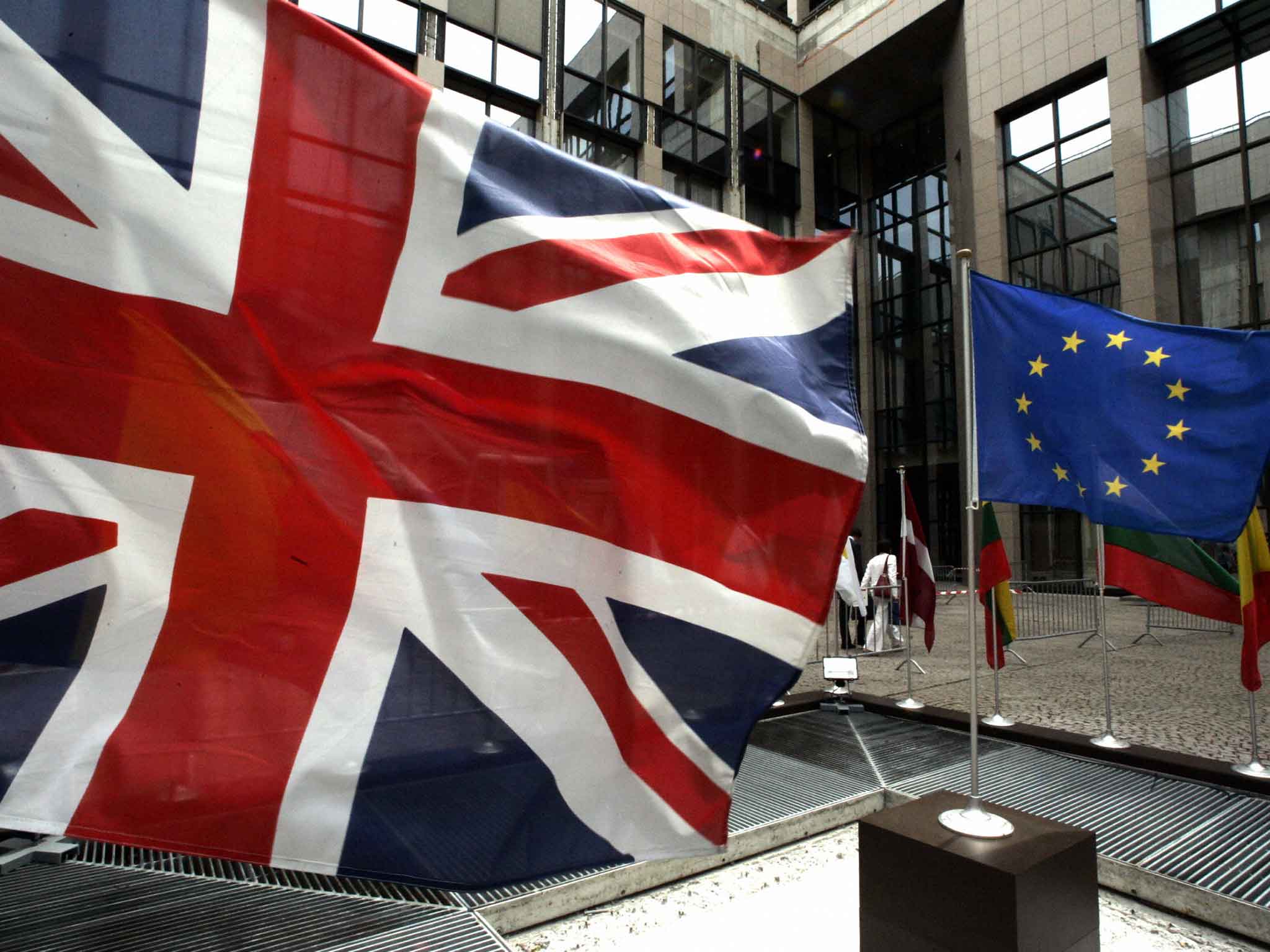
Image source: static.independent.co.uk

Economists are still uncertain about the long-term impacts of Brexit on the British and European economies but both “leave” and “remain” parties acknowledge that the short-term consequences of departing the union are likely to be negative. Brexit could expose Britain to heightened uncertainty over future trade arrangements that could potentially incur losses in income. The worst case scenario, according to the organization Open Europe, is that U.K. GDP would be 2.2 percent lower in 2030 if it leaves EU. Conversely, in a best case scenario, Britain could increase its GDP by 1.6 percent after Brexit.

Opinion polls show that the British people remain split on the Brexit issue. As U.K. nears the referendum, it is imperative for the citizens to weigh the pros and cons of leaving the union as the outcome of Brexit will impact not only Britain and Europe but also the rest of the world.

Friday, December 25, 2015

Forecasts and trends: Business in 2016


It is that time of the year again when industry observers share their insights on what’s in store for companies in the next 12 months. If 2015 was marked by high-profile mergers, jittery financial markets, shrinking economies, and corporate blunders, will 2016 follow the same path or a different road? Below are three projections for the coming year:

 More gigs to come: The so-called “gig economy” or an environment wherein temporary positions are prevalent and companies tap independent workers for short-term projects has finally made its mark this year. A 2015 survey by Freelancers Union of over 1,000 U.S. workers revealed that 34 percent had done freelance work over the past year, and 60 percent of them credit more than 25 percent of their income from such gig.

While there is still an ongoing debate on how exactly such employment model will benefit both independent contractors and organizations in the long-term, the fact remains that freelance work will continue to multiply, with more people looking to supplement their income and to inject more flexibility in their schedule.

Image source: theselfemployed.com

Technology will still rule. While the introduction of new technology in one way or the other has resulted in disruption, observers believe that 2016 will be the year the business community will witness a transformation in various segments. For instance, work mobility or the ability to work from anywhere, anytime, and on any device, will be primarily driven by technology. And with more workers, especially millennials favoring such setup, 2016 will see more advanced technology, devices, and tools that will support work flexibility and boost productivity.

Another use of advanced technology in business is in security. With more reports of data breaches and hacking, companies are looking for more stringent measures to protect sensitive information. And technology will play a key role in keeping data secure from malicious attacks.

Image source: mhlnews.com

It will be all about the [user] experience. Companies must acknowledge the fact that in the mobile age, customers expect actions to be completed in just a single tap. Gone are the days of waiting for advances in technology has allowed companies to offer their customers seamless and enriching experience.

For a truly rich user experience, companies will need to convert existing processes from analog to digital, to fully embrace the cloud, to boost their big data allocation, to solidify further their mobile strategy, and to smartly harness the power of social media.

Thursday, September 10, 2015

Retail moves: Tesla adds clothes and accessories to car lineup


http://www.teslamotors.com/sites/default/files/images/model-x/teaser@2x.jpg?2
Image Source: teslamotors.com


In a bid to unwrap the enigma behind its product, Tesla Motors has revamped its stores worldwide as the electric car company prepares to deliver its first sport-utility vehicle, Model X, early next year. A critical part of this makeover is the introduction of a retail lineup of bags, gloves, and other leather accessories, which call to mind the posh fashion merchandise of luxury car makers Ferrari, Porsche, and BMW.

The Tesla Design Collection, which will be available through Tesla’s revamped stores, will include premium leather pieces such as the $400 Moab Weekender Bag, the $300 Aurland Tote, the $100 Men's Touch Screen Leather Driving Gloves, the $100 Bethesda iPad Sleeve, the $40 Lully Pouch, and the $30 Maumee Key Fob Sleeve. Cycling jerseys will also go on sale in Tesla stores in October.

An in-house product design team based in Los Angeles is working on the retail collection. The materials used for the collection come from scraps of interiors of Tesla vehicles. According to Tesla, customers usually buy bags and accessories that match their cars’ interiors. In addition, the company is looking into a twice yearly, seasonal revamp of its stores, similar to the mechanisms of the fashion industry.


http://d2odvx3v4cbpyu.cloudfront.net/wp-content/uploads/2014/10/Tesla-Lifestyle-Leather-Goods.jpeg
Image Source: teslarati.com


Telling the Tesla story

Tesla’s retail strategy and its store transformation are part of the company’s efforts to tell its story, which industry observers note as an ingenious move for a young firm that is selling a product unfamiliar to most consumers. In the revamped stores, for example, interactive displays will highlight four elements about Tesla’s electric cars: safety, autopilot features, charging networks, and the dual motors that power each axle. Product specialists are also on hand to greet and educate costumers.

The latest Tesla project is also all about luring new customers and keeping current ones, which are critical in reaching the yearly sales goal of 500,000 electric cars by 2020 set by CEO Elon Musk. The company hopes that by making its in-store experience more engaging, it will attract a steady stream of curious shoppers.

Friday, July 31, 2015

Tap and Sip: Starbucks Partners with Lyft on Loyalty Program

To attract new customers and strengthen the loyalty of existing patrons beyond its coffeehouses, Starbucks Corp. is teaming up with ride-sharing service Lyft Inc.   Under the agreement, customers who use Lyft’s mobile app will earn loyalty “stars,” redeemable for food and drinks at Starbucks outlets.  Lyft drivers can also receive loyalty stars through the partnership. They even have the option to earn immediately a gold status, which normally takes several months to achieve, in the coffee giant’s loyalty program.  They can also receive loyalty stars via tips from riders.


“Our digital loyalty ecosystem will strengthen Lyft’s ability to attract and retain customers in a highly profitable way, while at the same time accelerating the incrementality of redemption of rewards,” Adam Brotman, chief digital officer of Starbucks, said in a statement.  Starbucks didn’t disclose the details of the multiyear agreement with Lyft, which is expected to commence later this year.


Image source: telegraph.co.uk

The pairing is the newest addition to Starbucks’ lineup of corporate partnerships that focus on its customer loyalty program.  Earlier this year, it forged a partnership with streaming music company Spotify.  Starbuck customers can earn loyalty stars by signing up for Spotify Premium, which can also give them a chance to influence in-store playlists.  Another recently announced arrangement is with The New York Times.  Currently, Starbucks patrons get free access to 15 NYT articles when using the company’s mobile app.  By 2016, however, Starbucks mobile app users can access top news of the day and more timely articles for free.


Image source: thedrum.com

Also central to Starbucks’ recent wave of tie-ups is its mobile system.  The Seattle-based coffeehouse chain is keen on beefing up its digital strategy and is working on making it easier for customers to order and pay for their purchases using their smartphones and other mobile devices.  Chief executive Howard Schultz revealed that 20 percent of Starbucks purchases worldwide were made using a mobile device.

Tuesday, July 28, 2015

Of Recovery and New Job Opportunities: Taking Advantage of the Economic Rebound

The economy may appear to be in the same shabby state as it had been since the start of the recession in the late 2000s, but appearances can be deceiving. Closer observation of current trends suggests that the worst of the economic storm has indeed passed, due in no small part to a rapid and widespread restructuring of the U.S. economy and gradual demographic and social shifts.

 Image source: mauryk2.com

The recession saw an end to the abuses that led to the housing bubble, while the slow but steady recovery of real estate and manufacturing were met with a resurgence of low energy costs and the increased spending power of the American buyer. In the previous year alone, job creation in the country reached a 6-year high. Moreover, lower crime rates have relieved some of the economic burdens from citizens, fostering more resilient urban economies in the process.

The U.S. economy's recovery is also frequently seen as the most sustainable, capable of keeping up growth expectations in the near future. However, the country's not out of the woods yet. While the real estate markets are recovering, the average potential homebuyer has not. The growing economic divides between rich and poor make the targeted economic growth goals all the more difficult to reach. More needs to be done to bridge this gap.


The economic climate has been extremely kind to startups and newer industries, which are leading the hiring boom as their insatiable appetite for talent propels them forward. With job demands at a robust high, the job market has become more and more competitive. Startups and other smaller businesses would need to step up their game to attract the same talent that other larger corporations are also vying for.

While it's too early to be overly confident with this new, more robust economy, there are plenty of reasons to be cautiously optimistic.

Thursday, May 14, 2015

From cars to homes: Tesla's move to power society


Image Source: reuters.com


Chief executive of Tesla Motors, Inc., Elon Musk, recently announced the company’s intention to expand its capabilities into the home market. In several tweets and reports, Musk revealed Tesla Energy – a branch of the business that will manufacture storage systems or batteries for homes, companies, and utilities. This new line of products, many financial experts agree, is Tesla’s attempt to capitalize on the ever-growing and rapid energy sector.

The need for alternative energy sources has been strengthening over the last few years. What with several politicians, celebrities, scientists, and other personalities calling for reduced dependence on fossil fuels, Tesla’s transition into the energy industry could not have come at a better time. According to Musk, the company’s goal is to "fundamentally change the way the world uses energy on an extreme scale." Tesla’s solution involves self-sustaining storage batteries that work with solar panels. The smallest unit, called the Powerwall, is a mere six-inches, and is hung inside a person’s garage or within the outer perimeters of the house.


Image Source: themalaymailonline.com


Tesla’s announcement has several implications in the global and local market. For one, many enterprises are now seeing the necessity to move into this industry as well; or begin amplifying their own power sources so that their production or management of their headquarters becomes energy-friendly. Second, many oil and gas companies are slowly feeling the effects of dwindling demand for fossil fuel sources. Recent reports suggest that oil output will reach a plateau in five years – with negligible growth over the same time period. This, combined with the move to make alternative energy sources (particularly solar power) more affordable and easier to harness, has caused many companies to worry about the future of their revenues.


Image Source: reuters.com

Tuesday, March 31, 2015

A beginner's guide to the stock market


Image Source: en.wikipedia.org


Those interested in developing better financial knowledge should consider a refresher course about the stock market. Contrary to popular belief, the stock market is simple to understand; the challenge is participating in it. Before anything, though, it is important that the individual ask himself or herself whether he or she is prepared to lose money. It is an inevitable fact that at one point in a stock broker’s career, he or she will lose a certain amount of money. To be sure, this can be gained back; but beginners should reflect whether they are willing to take the risk. The stock market is neither a stable environment nor is it a gambling arena. It is a financial market that requires patience, perseverance, and diligence. While it is an exciting venture – what with its potential high rewards – it also requires a basic knowledge of economics.

A few strategies are listed below to help the aspiring stock market enthusiast:


Image Source: thisismoney.co.uk


Investing in a funds, rather than in shares: Most beginners buy shares, and unintentionally place most of their funds in a single company. This is not recommended. Financial experts suggest investing in a fund such as a unit trust or an open-ended investment company. Trust funds and guaranteed equity bonds are also recommended. While these are a bit more complex to understand than standard shares, they have less risk of financial instability.

Splitting funds: If the individual has a bigger starting fund, it is suggested that he or she split the money into low, medium, and high risk investments. By splitting the funds, the individual not only potentially increases the returns but significantly hedges risks associated with placing money in a single investment. These should help the aspiring investor get a leg in the stock market. Practice is the best teacher, however, and no matter how much research an individual does, undoubtedly he or she will find that experience is the most ideal way to learn.


Image Source: analyticsweek.com